
A Short History of the Immigration Fight That Built—and Still Divides—America
In the Fina Mendoza Mystery State of the Union, Abuelita called President Reagan her hero.
“It was because of him,” she always said, “that I became an American citizen and your father became a congressman.”
Papa used to argue with her, reminding her that it was Congress that passed the immigration bill that made it possible for Abuelita to become a citizen. President Reagan just signed it. Abuelita never listened. As far as she was concerned, Ronald Reagan was the best president we ever had, better even than Abraham Lincoln or George Washington.
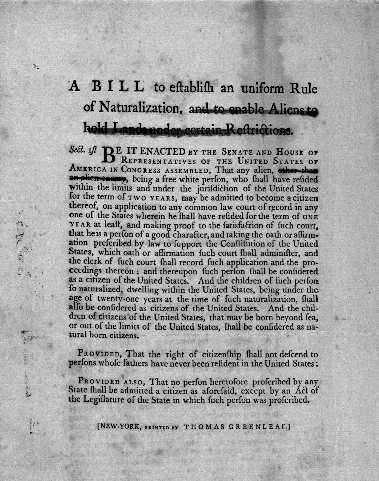
Image courtesy of the Library of CongressAmerica's First Immigration Law
Congress has been making immigration policies since 1790. The U.S. population at that time was either immigrants or Native Americans. Only one group was allowed to become a citizen.
The Naturalization Act of 1790 reads: any "free white person who resided within the limits and under the jurisdiction of the United States for at least two years could be granted citizenship if he or she showed good character and swore allegiance to the Constitution."
More exclusions followed.
Landmark Immigration Laws
1882 - Congress passes the Chinese Exclusion Act banning immigration of Chinese laborers. Chinese already in the country could become American citizens, but if they left the country, they couldn't return without certificataion.
1917 - Congress creates a "barred zone" forbidding immigration from the Middle East and Southeast Asia and created a literacy test to restrict immigration (primarily from European countries). Immigrants who were deemed "idiots" or "imbeciles," as well as criminals, polygamists, anarchists, prostitutes, and stowaways were forbidden entry.
1921 - Congress passes the Emergency Quota Act, the first time the U.S. restricted the number of immigrants admitted to the country.
1948 - Congresss passes the Displaced Persons Act allowing more than 200K European refugees to immigrate. It excluded many Jewish survivors of the Holocaust.
1962 - Congress passes the Migration and Refugee Assistance Act which provided monetary assistance to refugees, particularly those fleeing from Cold War communist countries. The act was amended in 1980, raising the annual ceiling for refugees to 50K.
1965 - Congress passes the Immigration and Nationality Act and abolishes the national-origins quota system, which historically favored immigrants from northern Europe and the British Isles. It also prohibits visa discrimination based on "race, sex, nationality, place of birth, or place of residence."

Photo courtesy of U.S. Citizenship and Immigration ServiceIRCA
The last major piece of immigration legislation was passed by Congress in 1986. The Immigration Reform and Control Act was also known as "Reagan Amnesty." It offered the opportunity for more than two million undocumented immigrants who'd lived in the U.S. for a decade or more a path to citizenship. It also imposed civil and criminal penalties on employers who knowingly hired individuals not authorized to work in the U.S.
President Reagan signed the bill, saying, "Our objective is only to establish a reasonable, fair, orderly, and secure system of immigration into this country and not to discriminate in any way against particular nations or people."

Photo courtesy of ICEImmigration Policy Today
Unlike previous immigration policies, written into law by Congress, current immigration actions have come from the executive branch. The White House initially announced that it would marshal federal resources to arrest and deport violent criminals.
The U.S. Department of Homeland Security says so far, more than 600,00 people have been deported. According to the Cato Institute, just 5% of those detained by ICE have been convicted of violent crimes, 73% have no convictions at all.
More than 170 U.S. citizens have also been caught up in immigration raids, according to ProPublica
Most recently, visas for visitors from 75 different countries have been frozen.
So far, Congress passed no new immigration measures.