
Partisanship: America’s Oldest Political Habit?
When Congress Got Ugly (Hint: It Wasn’t Yesterday)
From: Snake in the Grass: A Fina Mendoza Mystery
Republican Congresswoman Mitchell explains to Fina, the daughter of a Demcoratic congressman why she can no longer walk the lawmaker's dog Senator Something:
Things have changed on Capitol Hill. Back in the day, members would disagree with each other on the House Floor, but go out to dinner together afterwards. Even Republicans and Democrats used to talk to each other. Not anymore.
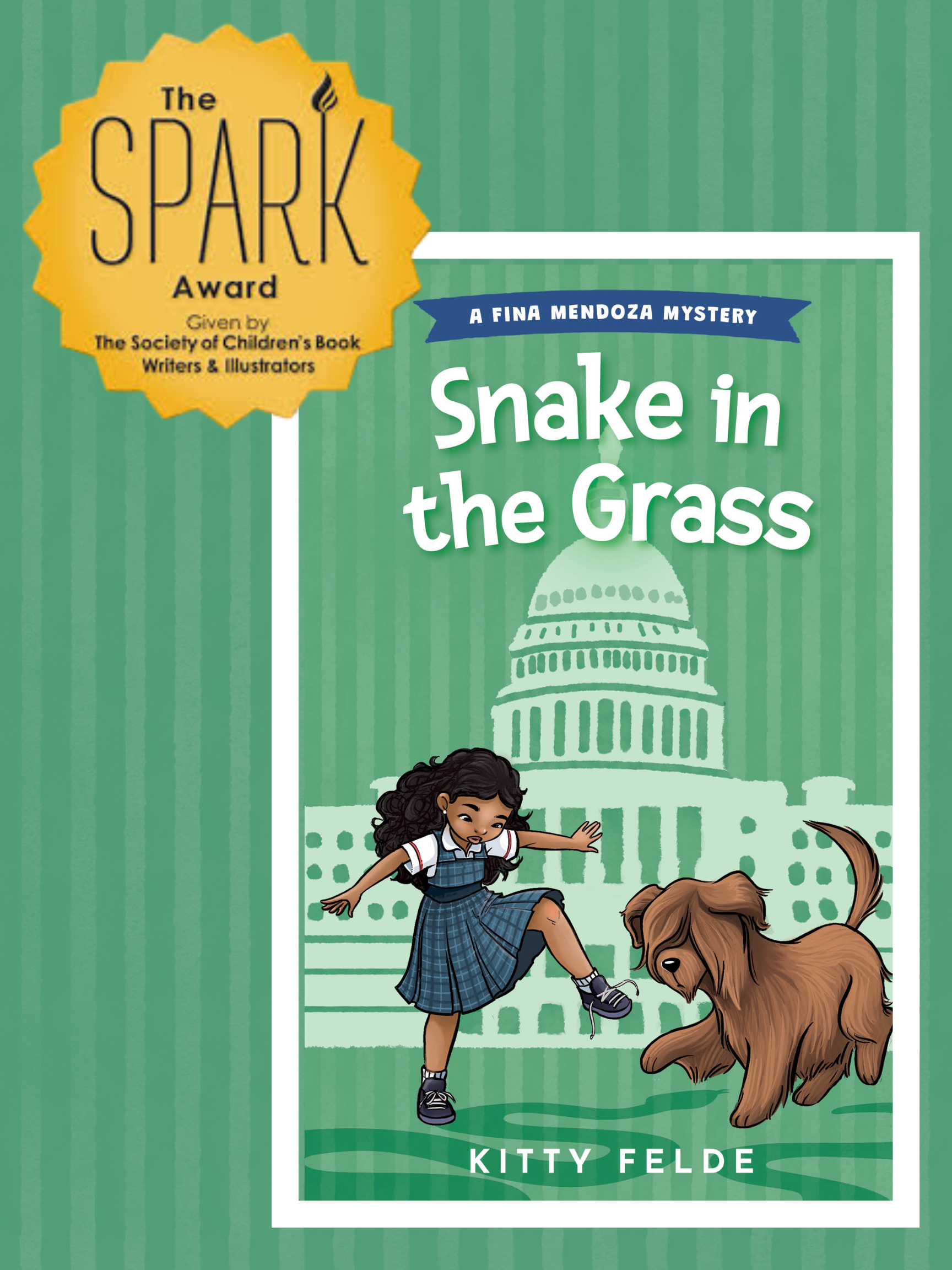
In the third Fina Mendoza Mystery Snake in the Grass, the partisanship has gotten so bad, someone is dumping snakes in the trash cans and gym bags of members of Congress who dare to talk to anyone from the other side of the aisle.
It's not just bad on Capitol Hill.
Back in 2022, the Pew Research Center found that 72% of Republicans and 63% of Democrats viewed the opposing party as more immoral than other Americans. That's a jump from 2016 when research found that just under half of Republicans and just over a third of Democrats felt that way..

Who's to Blame?
Many blame the media for the current state of divisiveness.
Johanna Dunaway, research director at Syracuse University’s Institute for Democracy, Journalism and Citizenship says the "media effects exist, but they don’t work the way people often assume."
She says TV, the internet, and radio mirror audience preferences. The blame, she says, goes to the economic model of today’s media landscape which relies on clicks. "Media outlets face strong economic incentives to publish and promote the most attention-grabbing content."

In the Beginning…
Only One President Did Not Belong to a Political Party
There's no mention of political parties in the U.S. Constitution.
But it didn't take long for the Founding Fathers to stake out political ground on topics ranging from the creation of a national bank to whether the U.S. should back France in its ongoing dispute with Great Britain. And they did that by forming political parties, something George Washington abhored.
In his Farewell Address in 1796, he wrote:
It agitates the community with ill-founded jealousies and false alarms, kindles the animosity of one part against another, foments occasionally riot and insurrection.
(image courtesy of U.S. Senate)The Darkest Hour
Slavery was the issue that most divided Congress.
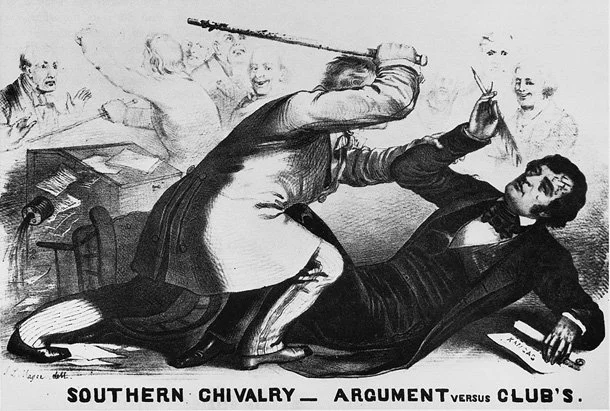
In May of 1856, Charles Sumner, an anti-slavery Senator from Massachusetts, spoke on the Senate floor on the topic of whether Kansas should be admitted to the United States as a slave state or a free state.
In a bit of rhetorical overkill, Sumner accused fellow Senator Andrew Butler of South Carolina of taking "a mistress . . . who, though ugly to others, is always lovely to him; though polluted in the sight of the world, is chaste in his sight—I mean," added Sumner, "the harlot, Slavery."
The insult so provoked Butler's fellow South Carolinian Congressman Preston Brooks that he walked across the Rotunda to the Senate side and beat Sumner with his cane.
Brooks was censured by fellow House members, resigned, and was re-elected. Sumner eventually recovered and returned to the Senate to serve for another eighteen years.
Today, partisanship can be blamed for the storming of the U.S. Capitol on January 6th, 2021 and subsequent pardons and scrubbing of the insurrection, as well as the current mad rush to redraw congressional districts in states around the country.
The only remaining question: will they resort to planting snakes in trash cans all over Capitol Hill?